Two Feasts — Two Sources — Two Systems
In-Depth Summary
Passover and Easter are often treated today as two names for the same feast. Yet biblically and historically, they are not the same. Passover is a feast that God Himself instituted and gave to Israel. It has a fixed place in the Hebrew calendar, a clear meaning, and a central place in God’s plan of redemption.
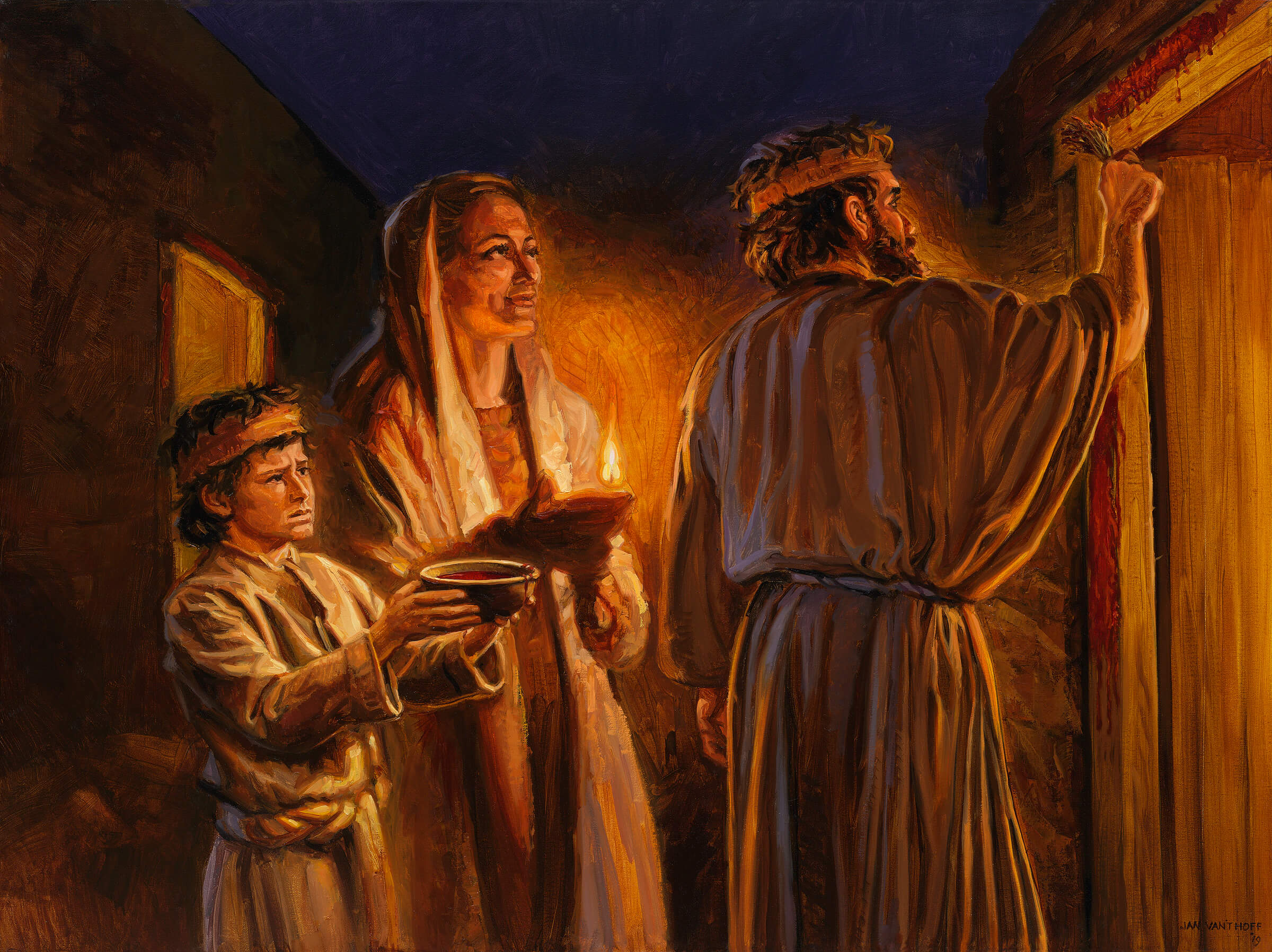
God gave Israel Passover in Exodus 12, when He was about to deliver His people from slavery in Egypt. A lamb without blemish had to be taken. It was slaughtered on the fourteenth day, and its blood was put on the doorposts. When God saw the blood, judgment would pass over the house.
Exodus 12:13
The blood will be a sign for you on the houses where you are, and when I see the blood, I will pass over you. No destructive plague will touch you when I strike Egypt.
From the very beginning, then, Passover was tied to a lamb, blood, judgment, and deliverance. Scripture then shows that this meaning does not end with the exodus from Egypt. The Passover lamb points forward to Yeshua the Messiah.
John 1:29
The next day John saw Jesus coming toward him and said, “Look, the Lamb of God, who takes away the sin of the world!”
Paul makes the connection even more directly:
1 Corinthians 5:7
Get rid of the old yeast, so that you may be a new unleavened batch — as you really are. For Christ, our Passover lamb, has been sacrificed for us.
Passover, therefore, is not merely a memorial of Israel’s deliverance from Egypt. It helps us understand what happened at the cross. Yeshua is the Lamb of God. His blood brings redemption. His death fulfills the picture of the Passover lamb.
The resurrection belongs inseparably to this picture. The gospel does not end at the cross. Christ died, was buried, and was raised. The resurrection is fully biblical and stands at the very heart of the gospel. The issue, then, is not that believers want to commemorate Yeshua’s resurrection. The issue arises when a later church feast built on non-biblical traditions is treated as though God Himself instituted it.
Nowhere does the Bible command believers to keep Easter as a separate church festival. Nor do we find Easter eggs, an Easter bunny, or other modern Easter customs anywhere in God’s institution of Passover. These elements are no part of the biblical Passover. Some of these customs have a complicated European history and cannot all simply be traced back to one specific pagan source — yet their true origin does lie in pagan practices. But that does not change the fundamental point: they do not come from God’s institution of Passover.
For a believer, the question is therefore not only: “Am I allowed to celebrate this?” The deeper question is: “Do I want to bind myself to a feast God never instituted, when He has shown me in His Word which appointed times and feasts He actually gave?”
When we discover that a tradition does not come from God’s Word, we are not obligated to hold on to it simply because others do. We are free to return to what Scripture actually says. That does not mean placing ourselves under rabbinic Judaism. It means digging deeper into the biblical calendar, the biblical Passover, and its biblical meaning for Yeshua the Messiah.
Church tradition does not determine what we celebrate. God’s Word determines how we serve God.
In-depth explanation
Key Conclusions
- Passover was instituted by God Himself.
- God gave Passover to Israel as part of His appointed times.
- Passover falls on the fourteenth day of the first month.
- The Passover lamb had to be without blemish.
- The lamb’s blood was central to the deliverance from Egypt.
- Yeshua is revealed in the New Testament as the Lamb of God.
- Paul directly calls Christ our Passover.
- Yeshua celebrated Passover with His disciples.
- His suffering and death took place in the context of Passover.
- The resurrection is fully biblical and forms an essential part of the gospel.
- The church’s Easter date is not the same as the biblical date of Passover.
- The split between the biblical Passover reckoning and the church’s Easter observance developed gradually over early church history.
- Easter is not a feast instituted by God.
- Easter eggs, the Easter bunny, and other modern Easter customs are no part of God’s institution of Passover.
- Believers do not need to bind themselves to a non-biblical religious feast simply because it is culturally or ecclesiastically customary.
- Believers may return to the biblical Passover and the biblical calendar without thereby placing themselves under rabbinic Judaism.
- Passover is not the way of salvation; Yeshua is the Way of salvation.
- Even so, Passover helps us understand the death and resurrection of Yeshua more deeply from Scripture.
From Passover to the Messiah: Why the Difference Matters
To properly understand the difference between Passover and Easter, we should not start with modern traditions. We must start with Scripture.
- There we find the origin of Passover.
- There we find the Hebrew calendar.
- There we find the Passover lamb.
- There we find the blood.
- There we find the deliverance.
- And there begins the line of redemption that ultimately leads to Yeshua.
Whoever becomes convinced that Easter is not a biblical institution does not need to keep taking part in that tradition out of fear of what others will think. Obedience to God does not begin with what the majority does, but with examining His Word.
Whoever understands Passover from Exodus understands the cross more deeply.
1. Passover Was Instituted by God
The origin of Passover does not lie with the church. Passover begins with God Himself.
In Exodus 12, God commanded Israel to take a lamb and keep it for the household. The animal had to be without blemish and was to be slaughtered on the fourteenth day.
Exodus 12:5-6
The animal you choose must be a year-old male without defect, and you may take it from the sheep or the goats. Take care of it until the fourteenth day of the month, when all the members of the community of Israel must slaughter them at twilight.
Leviticus confirms that Passover is part of the feasts that God Himself established.
Leviticus 23:5
The LORD’s Passover begins at twilight on the fourteenth day of the first month.
Scripture, then, does not call this a feast Israel invented for itself. It is the LORD’s Passover.
2. The Date of Passover Was Determined by God
Passover is not tied to some arbitrary date set by a church calendar. God gave Israel a concrete place in the calendar.
Exodus 12:2
This month is to be for you the first month, the first month of your year.
Passover is then linked to the fourteenth day of this first month.
Leviticus 23:5
The LORD’s Passover begins at twilight on the fourteenth day of the first month.
This makes for a fundamental difference with the later church calculation of Easter. Over the course of history the church’s date was fixed by its own calendar calculation and is therefore not identical to the biblical date of Passover.
What God gave a fixed place in His calendar, we should not simply replace with a human calendar.
3. The Lamb and the Blood Are Central
The heart of Passover is the lamb. The lamb’s blood was applied to the doorposts. Passover was instituted during the exodus from Egypt:
- Take a lamb without blemish
- Slaughter it on the fourteenth day
- Apply the blood to the doorposts
- Eat it with unleavened bread
“The blood will be a sign for you… when I see the blood, I will pass over you.”
Exodus 12:13)
Meaning:
When the angel of death moved through Egypt:
- Houses with blood were spared
- Houses without blood were struck
Principle: blood protects against judgment.
Exodus 12:7
They are to take some of the blood and put it on the sides and tops of the doorframes of the houses where they eat the lambs.
The blood was the sign by which judgment passed by.
Exodus 12:23
When the LORD goes through the land to strike down the Egyptians, He will see the blood on the top and sides of the doorframe and will pass over that doorway, and He will not permit the destroyer to enter your houses and strike you down.
When we then turn to the New Testament, we find the same imagery in Yeshua.
1 Peter 1:18-19
For you know that it was not with perishable things such as silver or gold that you were redeemed from the empty way of life handed down to you from your ancestors, but with the precious blood of Christ, a lamb without blemish or defect.
The Passover lamb points forward to the Lamb of God.
The Passover Lamb as a Prophetic Symbol
Characteristics of the lamb:
- Without blemish → perfection
- No bone broken → a specific fulfillment
- Dying in someone’s place → salvation for others
“Do not break any of its bones.”
(Exodus 12:46)
- Dying in someone’s place
“The life of a creature is in the blood… it is the blood that makes atonement.”
(Leviticus 17:11)
This points forward to a greater reality.
The Blood as Salvation
In Egypt: Blood on the door → judgment passes over
In the gospel: The blood of Yeshua → salvation from judgment
In the gospel:
(Ephesians 1:7)
“In Him we have redemption through His blood, the forgiveness of sins.”
(1 John 1:7)
“The blood of Jesus, His Son, purifies us from all sin.”
Salvation comes through a sacrifice, not through works
The Last Supper
The Last Supper was a Passover meal in which Yeshua gave new meaning to the elements:
- Bread → “this is my body”
- Wine → “this is my blood of the covenant”
“This is My body… this is My blood, the blood of the new covenant.”
(Luke 22:19-20)
He reinterprets Passover around Himself
4. Yeshua Is Our Passover
Paul makes the connection between Passover and Christ unmistakable.
1 Corinthians 5:7
Get rid of the old yeast, so that you may be a new unleavened batch — as you really are. For Christ, our Passover lamb, has been sacrificed for us.
Here Christ is not merely associated with Passover in a general sense. Paul uses Passover as a direct explanation of Christ’s sacrifice.
The line is clear:
- Israel was enslaved in Egypt.
- God provided a lamb.
- The blood brought protection.
- Israel was set free.
- Yeshua comes as the Lamb of God.
- His blood brings deliverance from sin.
From the lamb in Egypt to the Lamb of God.
5. Yeshua Kept Passover
Yeshua did not stand outside the biblical feast calendar. He lived within the Jewish context of Israel and kept the feasts God had given to Israel.
Luke 22:15
And he said to them, “I have eagerly desired to eat this Passover with you before I suffer.”
These words are striking. Yeshua knew His suffering was near. The Passover meal was directly connected to what was about to happen.
Matthew 26:17
On the first day of the Festival of Unleavened Bread, the disciples came to Jesus and asked, “Where do you want us to make preparations for you to eat the Passover?”
The Last Supper, then, must be read against the background of Passover, not apart from it.
6. The Cross Stands in the Context of Passover
Yeshua was crucified during Passover, at the very time the lambs were being slaughtered in the temple.
Yeshua was crucified during Passover:
“It was the day of Preparation for the Passover…”
(John 19:14)
While the lambs were being slaughtered, the true Lamb died.
This means:
- The ritual takes place inside the temple
- The fulfillment takes place outside the city
Old covenant = shadow
Yeshua = reality
Yeshua’s crucifixion took place in the very period when Passover was being celebrated. The Gospels repeatedly connect His final days with the Passover feast and the Feast of Unleavened Bread.
The precise chronological relationship between the Gospel accounts is debated among biblical scholars, mainly because of the difference in presentation between the Synoptic Gospels and John. This, however, does not change the central point in any way: Yeshua’s suffering and death stand fully within the context of Passover.
Various details of His death also correspond to Passover imagery. The Passover lamb, for instance, was not allowed to have a broken bone.
Exodus 12:46
It must be eaten inside the house; take none of the meat outside the house. Do not break any of the bones.
John then records concerning Yeshua:
John 19:36
These things happened so that the scripture would be fulfilled: “Not one of his bones will be broken.”
The cross does not stand apart from Passover. The Passover lamb helps us understand what Christ accomplished on the cross.
7. Passover and the Resurrection
Passover, however, must not be reduced to the crucifixion alone. The gospel encompasses both the death and the resurrection of Christ.
1 Corinthians 15:3-4
For what I received I passed on to you as of first importance: that Christ died for our sins according to the Scriptures, that He was buried, that He was raised on the third day according to the Scriptures.
The resurrection, then, is not a human addition to the gospel. It is a core truth of the faith.
1 Corinthians 15:17
And if Christ has not been raised, your faith is futile; you are still in your sins.
We must therefore make an important distinction. Yeshua’s resurrection is biblical; the church’s Easter observance is not the institution the Bible gives for it. We do not need to let go of the truth of the resurrection when we distance ourselves from Easter. On the contrary — we can go on proclaiming the resurrection from Scripture, within its biblical context.
8. Passover and the Feast of Unleavened Bread
Passover is closely linked to the Feast of Unleavened Bread. God commanded Israel to eat unleavened bread for seven days and to remove leaven from their houses.
Exodus 12:15
For seven days you are to eat bread made without yeast. On the first day remove the yeast from your houses, for whoever eats anything with yeast in it from the first day through the seventh must be cut off from Israel.
Paul then applies this image spiritually.
1 Corinthians 5:8
Let us keep the Festival, not with the old bread leavened with malice and wickedness, but with the unleavened bread of sincerity and truth.
The blood of the Lamb brings redemption; the old life must then be put away.
9. What Happened in Church History?
The split between the biblical Passover date and the church’s Easter observance did not happen overnight. In the early centuries of Christianity, there was already discussion over when the death and resurrection of Christ should be commemorated.
Some Christian communities held to the fourteenth of Nisan, while other churches increasingly emphasized Sunday as the day of the resurrection. This discussion eventually became part of the broader development toward a uniform church calculation of Easter.
The Council of Nicaea in 325 was an important turning point in this process. It is historically too simplistic to say that Nicaea invented Easter outright. The observance already existed before then. Nicaea was, however, significant for the development of a uniform church calculation and for detaching that calculation from the Jewish calendar.
In this way, an increasingly clear distinction emerged between the biblical Passover tradition and the church’s Easter tradition.
10. Why Believers Should Not Celebrate Easter
As believers, we should not simply adopt every religious feast just because the church or society celebrates it. We are called to serve God according to His Word, not according to human tradition.
Passover was instituted by God Himself. Easter is a later church observance that God never instituted anywhere in Scripture. On top of that, over the course of history, Easter has become attached to customs and symbols that are no part of God’s Passover. A believer, therefore, does not need to bind himself to a feast whose origin does not lie in God’s command.
When we know that something is not a biblical institution, we do not need to go along with it simply because everyone around us does. Obedience to God is not determined by majority, custom, or social pressure. If Scripture shows us something, we may act on it, even when family, friends, churches, or other believers see it differently.
Mark 7:8
You have let go of the commands of God and are holding on to human traditions.
This does not mean we should submit ourselves to rabbinic Judaism or adopt every Jewish tradition. There is a real difference between God’s biblical feasts and later rabbinic traditions. Our starting point must be Scripture.
So when we return to Passover, we are not aligning ourselves with a human religion. We are returning to the biblical background in which Yeshua lived, kept Passover, and accomplished His work of redemption.
A believer, therefore, does not need to wait until everyone else is convinced. If we discover in Scripture that God instituted Passover and did not institute Easter, we may simply follow the biblical path. Even if others do not join us.
We do not need to go along with a tradition just because everyone does it. We may do what God’s Word shows us.
11. Easter Eggs and the Easter Bunny Are Not Biblical Symbols
In the modern Easter celebration, eggs, Easter bunnies, chocolate, and other symbols are strongly present.
But when we read Exodus 12, we do not find these symbols there.
The biblical Passover symbolism centers on:
- the lamb;
- the blood;
- unleavened bread;
- bitter herbs;
- the deliverance from Egypt;
- and God’s salvation.
The precise historical origin of each modern Easter symbol is not always easy to pin down. But that is not necessary in order to see the biblical distinction.
Easter eggs and the Easter bunny are no part of the biblical institution of Passover.
12. Tradition May Not Replace God’s Word
Yeshua warned that human traditions must never take the place of God’s Word.
Mark 7:8
You have let go of the commands of God and are holding on to human traditions.
The issue is not that every tradition is automatically wrong. The issue arises when a tradition is given the same authority as God’s Word.
That is why we must examine everything.
Acts 17:11
Now the Berean Jews were of more noble character than those in Thessalonica, for they received the message with great eagerness and examined the Scriptures every day to see if what Paul said was true.
Not: “What has the church always done?” But: “What does Scripture say?”
13. Are Believers Required to Keep Passover?
Here we need to make an important distinction.
- Passover is biblical.
- Passover was instituted by God.
- Passover has deep meaning.
- Passover points to Christ.
- But Passover is not the basis of our salvation.
Ephesians 2:8-9
For it is by grace you have been saved, through faith — and this is not from yourselves, it is the gift of God — not by works, so that no one can boast.
Studying or observing Passover, then, should never turn into a new legalistic system by which believers judge one another.
Passover does not save us. Yeshua saves us.
But precisely because Yeshua is our Passover, it is valuable to understand what Passover meant and why it holds such an important place in Scripture.
14. Returning to the Biblical Feasts Does Not Mean Returning to Rabbinic Judaism
This distinction matters. When a believer decides to no longer celebrate Easter and instead to study or observe Passover from Scripture, that does not mean he is converting to Judaism.
The Bible distinguishes between God’s commandments and human traditions. Within Judaism itself, over the centuries, traditions and interpretations have also arisen that do not come directly from Scripture.
Our starting point, then, should not be: “What does the church do?” nor automatically: “What does rabbinic Judaism do?”
Our starting point is: “What has God said in His Word?”
The biblical feasts existed long before later church and rabbinic systems developed. So when we study Passover, we are not going back to a human tradition. We are going back to Scripture and to the world in which Yeshua and His apostles lived.
This means we can understand Passover as a biblical testimony to God’s plan of redemption, of which Yeshua the Messiah is the center.
15. Two Feasts — Two Sources — Two Systems
| Passover | Easter |
|---|---|
| Instituted by God | Developed historically by the church |
| Exodus 12 | Early church history |
| 14 Nisan | Variable church date |
| Hebrew calendar | Church calendar calculation |
| Lamb and blood | Resurrection as central theme |
| Deliverance from Egypt | Commemoration of the resurrection |
| Feast of the LORD | Church observance |
| Fulfillment in Christ | Historically developed tradition |
This difference does not mean the resurrection is unbiblical. Quite the opposite — the resurrection is a core truth of the gospel.
The difference lies between God’s original institution and a church feast that developed later. Whoever wants to commemorate Christ’s resurrection does not necessarily need to adopt the church’s Easter tradition to do so.
We can fully confess the resurrection without celebrating Easter as a church feast.
Practical Application
1. Examine What the Bible Says
- Read Exodus 12.
- Read Leviticus 23.
- Read Deuteronomy 16.
- Study the biblical calendar.
- Always compare tradition against God’s Word.
2. Step Away From Easter
When you become convinced that Easter is not a feast God instituted, you do not have to keep celebrating it simply because it is a family tradition or because others expect it of you. You can simply say that you choose to examine God’s biblical feasts and no longer take part in a church tradition that was never instituted in Scripture.
3. Return to Passover
- Come to know the biblical meaning of Passover.
- Study Exodus 12.
- Study Leviticus 23.
- Study the Passover context of the Gospels.
- See how Christ fulfills Passover.
4. Do Not Turn Passover Into a New Legalistic System
- Passover does not save.
- A date on a calendar justifies no one.
- Our salvation is in Yeshua.
- The biblical feasts help us understand God’s plan of redemption more deeply.
5. Do Not Automatically Follow the Crowd
The fact that family, friends, or other believers celebrate Easter does not mean you have to as well. A believer does not need permission from others before acting according to his conscience and God’s Word.
Once you have seen what Scripture says, you do not need to wait until everyone else agrees with you.
6. Keep Yeshua at the Center
- The goal is not the calendar.
- The goal is not a religious debate.
- The goal is not following rabbinic traditions.
- The goal is Christ.
Summary
Passover is not a church invention. It is a feast that God Himself instituted and gave to Israel. Scripture connects Passover with a fixed date, a lamb without blemish, blood, judgment, and deliverance.
When we read the New Testament against the background of Exodus 12, the meaning grows even deeper.
- Passover brings us to the lamb.
- The blood speaks of redemption.
- Yeshua is called the Lamb of God.
- Paul calls Christ our Passover.
- The cross takes place in the context of Passover.
- The resurrection completes the proclamation of the gospel.
Over the course of history, the church’s Easter observance developed differently from the biblical Passover. The date was calculated differently, and various traditions were later attached to the celebration.
A believer, therefore, does not need to bind himself to Easter. If God instituted Passover and Scripture nowhere commands us to celebrate Easter, there is no biblical reason why we would need to maintain a church tradition.
At the same time, we must distinguish between God’s biblical feasts and rabbinic Judaism. Returning to Passover does not mean adopting rabbinic traditions. It means returning to Scripture and to the biblical context in which Yeshua lived and accomplished His work of redemption.
We also do not need to wait until others agree with us. When someone comes to this conviction from God’s Word, he may act on it — not out of pride and not to judge others, but out of obedience to God.
- From the lamb in Egypt to the Lamb of God.
- From the blood on the doorpost to the blood of Christ.
- From slavery in Egypt to freedom from sin.
- From Passover to the cross.
- From the grave to the resurrection.
Passover points to Christ.
Christ is the fulfillment.
The cross is the sacrifice.
The resurrection is the victory.
We do not need to defend a human tradition when God’s Word shows us a better way.
In the end, it is not about Easter or Passover as a religious name, but about the Lamb who was slain for us.
Frequently Asked Questions
1. Are Passover and Easter the same thing?
No. Passover is the biblical feast God instituted in Exodus 12. The church’s Easter observance developed later, with its own calendar and traditions.
2. Why shouldn’t believers celebrate Easter?
Because Easter is not a feast God instituted in Scripture. A believer does not need to bind himself to a religious tradition that does not come from God’s Word, especially when Scripture itself gives us a God-instituted Passover.
3. Is Easter pagan?
The church’s Easter observance was not instituted by God, and non-biblical customs became attached to it over the course of history. However, it is historically too simplistic to trace every part of Easter, without distinction, directly back to a single pagan religion. The biblical objection is simpler: Easter is not the feast that God instituted in Scripture.
4. Does Passover still hold meaning for Christians?
Yes. Paul directly calls Christ our Passover in 1 Corinthians 5:7. Passover helps us understand the sacrifice and redemption found in Christ, from Scripture.
5. Is Yeshua the Passover Lamb?
Yes. John calls Him the Lamb of God, and Paul directly connects Christ with Passover.
John 1:29
Look, the Lamb of God, who takes away the sin of the world!
6. Did Yeshua celebrate Passover?
Yes. Luke 22:15 records that Yeshua eagerly desired to eat the Passover with His disciples before He suffered.
7. Is Yeshua’s resurrection part of the gospel?
Absolutely. The resurrection is a fundamental part of the gospel. Paul says Christ died for our sins and was raised on the third day, according to the Scriptures.
8. Can we celebrate the resurrection without celebrating Easter?
Yes. Faith in Christ’s resurrection does not depend on the name or calendar of a church feast. We can proclaim and commemorate the resurrection from Scripture without binding ourselves to the church’s Easter tradition.
9. Are Easter eggs biblical?
No. Eggs are nowhere prescribed as part of Passover or as part of God’s institution of the feast.
10. Is the Easter bunny biblical?
No. The Easter bunny appears nowhere in the biblical institution of Passover or in the gospel.
11. Did the Council of Nicaea invent Easter?
No. The debate over the date of Easter already existed before 325. The Council of Nicaea was, however, an important moment in the development of a uniform church observance of Easter.
12. So do believers need to become Jewish?
No. Returning to the biblical feasts does not mean placing oneself under rabbinic Judaism. It means taking God’s Word seriously and examining the biblical context of the feasts.
13. Do we have to follow all Jewish traditions?
No. The standard is not “what Jews do today,” but what Scripture says. A distinction must be made between God’s biblical feasts and later rabbinic traditions.
14. What if my family still celebrates Easter?
A believer can calmly and respectfully explain his conviction. You do not need to take part in a religious tradition in order to love or respect family members.
15. Do I have to wait until other believers understand this too?
No. Once you come to a biblical conviction after examination, you may act on it. Acts 17:11 shows that believers themselves are to examine the Scriptures to see whether something is really so.
16. Is Passover necessary for salvation?
No. Our salvation is by grace through faith in Christ. No date on a calendar justifies anyone.
17. Why is the blood so important?
Because the blood at the first Passover was the sign of protection, and the New Testament places Christ’s blood at the very center of redemption.
18. What matters most in the end?
The calendar is not the center. Nor is tradition. Nor are Easter eggs or the Easter bunny.
-
-
-
-
- The Lamb is at the center.
- Yeshua is the Lamb of God.
- He is our Passover.
- He died for our sins.
- He rose from the dead.
- The Lamb is at the center.
-
-
-
Passover points to Yeshua HaMashiach.
[end]