IMPORTANT:
This website uses specific Hebraic/Biblical definitions for terms such as: FatherGod, God, Messiah, Holy Spirit, Worship and Son of God. Please first read: How To Read This Website
Promise, shadow and fulfillment

 Introduction
A frequently asked question is: “Where does the Bible say that the Old Testament is about Christ?” The surprising answer is: in far more places than we often realize.
According to Lord Yeshua Himself, the Old Testament is not a separate book, but a foreshadowing — a preparation for His coming. Law, prophets, feasts, persons and symbols together form one great line that culminates in the Mashiach. One of the most fundamental questions in Christian theology is this:
Is the Mashiach truly present in the Old Testament, or do Christians read Him into it afterward?
This question touches not only on exegesis, but on the unity of the Bible itself. If the Mashiach only appears in the New Testament, then the Old Testament is a closed chapter. But if the Mashiach is the goal and center, then the Old Testament proves to be a prior revelation.
In this article we will guide you along that line.
Lord Yeshua about the Old Testament
The key text is:
Luke 24:27
“And beginning with Moses and all the Prophets, He explained to them what in all the Scriptures concerned Him.”
Here Yeshua establishes three things:
- The suffering of the Mashiach is necessary
- This suffering is written
- The entire Tanakh (Law, Prophets, Writings) points to Him
Yeshua does not say here that some texts are about Him, but that all Scripture in its deepest layer points to Him. Also in:
In John 5:39 He says:
“These are they which testify of Me.”
Lord Yeshua presents Himself not as an addition to the OT, but as its interpretation.
The biblical principle: promise → fulfillment
The New Testament continually uses the same reading principle:
- the OT contains promise
- the Mashach is the fulfillment
Hebrews 10:1
calls the law:“a shadow of the good things to come”
A shadow is not an illusion, but neither is it the reality itself. The OT is real, but temporary.
Persons who typify the Mashiach


- Adam: the first and the last man, head of humanity
Romans 5:14 explicitly calls Adam a type of the Mashiach.
Adam brought death, the Mashiach brings life. The structure of representative headship is restored in Christ.
- Moses: the deliverer and mediator
Deuteronomy 18:15 promises a prophet “like Moses.” In Acts 3:22 this is explicitly applied to Yeshua.
Moses:
-
-
- delivers from slavery
- mediates the covenant
- speaks God’s word
-
The Mashiach:
-
-
- delivers definitively
- brings a new covenant
- is the Word Himself
-
- David: the anointed king
David is king, suffers, is rejected and ultimately exalted. The Mashiach fulfills this pattern perfectly and eternally.
David:
-
-
- anointed
- rejected
- suffering
- suffering
- exalted
-
- Joseph: rejection, exaltation and salvation
Joseph is sold by his brothers, suffers innocently, is exalted and saves many. His words in Genesis 50:20 echo the cross: “God intended it for good.”
Joseph is:
-
-
- loved
- hated
- sold
- punished innocently
- exalted
- savior of many
-
- Jonah: death and resurrection
Matthew 12:40
“For as Jonah was three days… so will the Son of Man be.”
Institutions that foreshadow

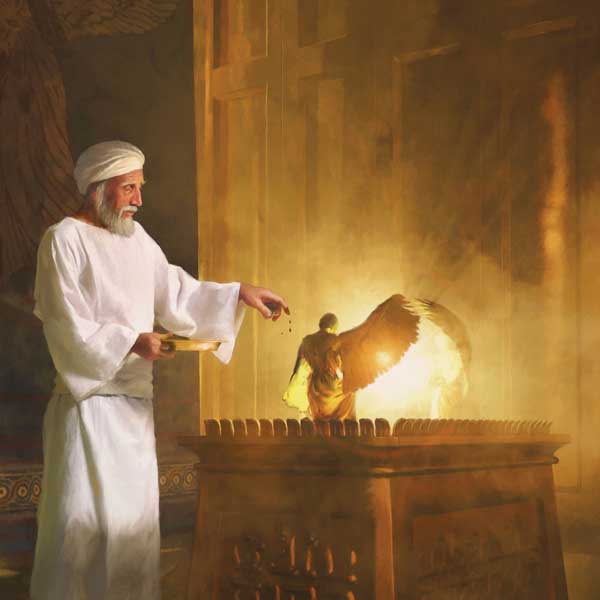
- Sacrifices
In the OT an innocent animal dies in place of the guilty person.
The sacrificial system teaches substitution.
Hebrews 10:1 calls this a shadow.
- High Priest
Once a year enters the Holy of Holies. The Mashiach enters once and for all with His own blood (Heb. 9).
- Temple
The temple is God’s dwelling place. God dwells among His people.
John 2:21:
Jesus’ body is the true temple.
In Him FatherGod Himself dwells among mankind.
Feasts as a prophetic calendar


- Passover (NOT Easter!)
Exodus 12
Blood protects against judgment. The lamb dies so that the people may live. The blood of the lamb saves from judgment.
1 Cor 5:7
“Christ our Passover Lamb.”
- Firstfruits
The first harvest guarantees the rest
1 Cor 15:20;
Christ is the firstfruits of the resurrection.
Symbols and events

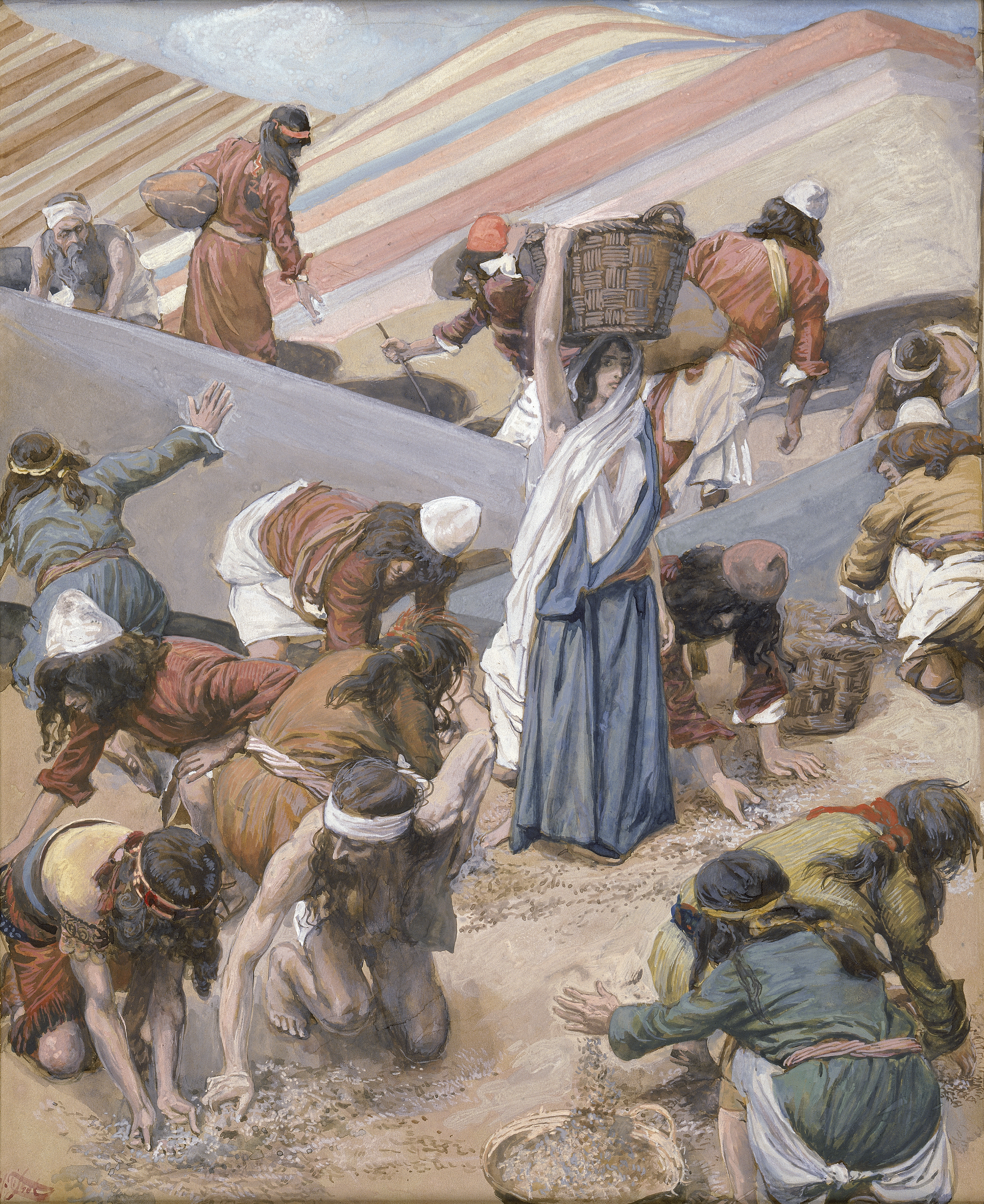

- Bronze serpent → look and live → faith brings life (John 3:14)
- Manna → bread from heaven (John 6)
- Rock → source of life, living water, the Mashiach Himself (1 Cor. 10:4)
Recurring pattern
The OT continually follows the same rhythm:
Election → rejection → suffering → exaltation → salvation of many
This pattern comes together perfectly in the Mashiach.
- Joseph: loved → sold → imprisoned → exalted → savior in famine
- Moses: called → rejected → flight → return → deliverer
- David: anointed → persecuted → suffering → king
- Israel itself: called → exile → restoration
These are not isolated stories, but variations of one and the same redemptive-historical movement.
What does “comes together perfectly” mean?
“Perfectly” here means not only better, but:
-
-
- complete
- definitive
- without need of repetition
- without remaining tension
-
In the Old Testament:
-
-
- every fulfillment remains temporary
- deliverers die
- guilt returns
- deliverance never reaches its end
-
The pattern continues onward, but is never completed.
What does “coming together in the Mashiach” mean?
In the Mashach something new happens: All the lines that in the OT run separately, through different persons, apart from one another, come together in one person.
Concretely:
- He is the chosen Son
- He is rejected by His people
- He suffers innocently
- He is exalted by God
- He does not save temporarily, but definitively
Where the OT shows this pattern:
- scattered unfinished
- through multiple figures
the Mashiach brings it all together.
Why is this important?
Because it shows that Yeshua:
- He does not save temporarily, but definitively
- does not merely happen to fit into the Gospel
- was not inserted afterward and made to fit
- but is the goal toward which the Old Testament was always moving
The Old Testament works like a musical composition with recurring themes. Those themes become increasingly clear, but only in Lord Yeshua do you hear the full harmony.
Summarized in one sentence:
With
“with this pattern the Old Testament comes together perfectly in the Mashiach”
we mean:
Everything that repeatedly, but never definitively, happens throughout the Old Testament:
rejection, suffering, exaltation and salvation; becomes in the Mashiach once, complete and everlasting reality.
And now the central point: Lord Yeshua is the GOD of the OT.
Here it goes even deeper. The New Testament does not only say that Lord Yeshua fulfills what God did, but that He is the same God who speaks and acts in the Old Testament. One of the most profound claims of the New Testament: Lord Yeshua is not merely a messenger of God, a prophet, or even only the promised Messiah. The New Testament reveals that He is the very God who spoke and acted throughout the Old Testament. The apostles do not merely teach that Yeshua fulfills Old Testament prophecies. They repeatedly identify Him with YHWH, the LORD of Israel.
This may seem like a contradiction. Therefore, it is extremely important that you read the definitions click provided on this website in order to understand the distinction between God and FatherGod.
- The Name: LORD (YHWH)
In the OT God is called YHWH (LORD). In Greek this is translated as Kyrios (Lord). The NT calls Yeshua Kyrios in texts that refer to YHWH, the God of the Old Testament, (document for further explanation) in the OT. Throughout the Old Testament, God reveals Himself by His covenant name, YHWH (usually translated as LORD in English Bibles). When the Hebrew Scriptures were translated into Greek (the Septuagint), the name YHWH was commonly rendered as Kyrios (“Lord”). The significance of this becomes clear in the New Testament. The apostles frequently apply Old Testament passages about YHWH directly to Yeshua, identifying Him as the LORD of the Old Testament.
- OT texts about YHWH applied to Yeshua
Joel 2:32 → Romans 10:9–13
Joel 2:32
“Everyone who calls on the name of the LORD shall be saved.”
Paul applies this to Yeshua Romans 10:9-13:
-
-
- “That if you confess with your mouth the Lord Jesus and believe in your heart that God has raised Him from the dead, you will be saved.
- For with the heart one believes unto righteousness, and with the mouth confession is made unto salvation.
- For the Scripture says, ‘Whoever believes on Him will not be put to shame.’
- For there is no distinction between Jew and Greek, for the same Lord over all is rich to all who call upon Him.
- For ‘whoever calls on the name of the Lord shall be saved.’”
-
Isaiah 45:23
“To Me every knee shall bow.”
-
-
- Psalm 102:25–27 (YHWH as Creator) → applied to Yeshua in Hebrews 1:10–12.
- Isaiah 40:3 (“Prepare the way of YHWH”) → applied to the coming of Yeshua in the Gospels.
- Zechariah 12:10 (“They will look upon Me whom they have pierced”) → applied to Yeshua in John 19:37.
- Isaiah 8:13–14 (YHWH as the stone of stumbling) → applied to Yeshua in Romans 9:33 and 1 Peter 2:7–8.
-
- Paul says
Philippians 2:9–11
“Every knee shall bow before Jesus.”
- Yeshua active before His birth
1 Corinthians 10:4
“That Rock was Christ.”
The Messiah was already present in the wilderness among the Jews, not only from Bethlehem onward.
- Isaiah saw Yeshua’s glory
Isaiah 6
Isaiah sees the LORD on His throne.
John 12:41
“Isaiah saw His glory and spoke about Him.”
That “Him” is Lord Yeshua.
“I AM”
Exodus 3:14
God calls His name: “I AM”.
Lord Yeshua says:
John 8:58
“Before Abraham was, “I AM.”
- The reaction of the Jews (they want to stone Him) clearly shows:
they understand this as a claim to deity.
In other words, Lord Yeshua indeed claimed to be God.
Not FatherGod Himself but: Son of God.
Conclusion
The New Testament writers do far more than present Yeshua as FatherGod’s representative. Again and again, they take passages that explicitly refer to YHWH and apply them directly to Him. The Lord whose name saves in Joel, the Lord before whom every knee bows in Isaiah, the Creator of Psalm 102, the LORD whose way is prepared in Isaiah 40, the pierced YHWH of Zechariah 12, and the stone of stumbling in Isaiah 8 are all identified in the New Testament with Yeshua. The cumulative evidence leads to a remarkable conclusion:
The apostles understood Yeshua not merely as the Mashiach sent by FatherGod, but as the LORD Himself, the YHWH who revealed Himself throughout the Old Testament as God.
The Old Testament:
- points forward to the Messiah
- is explained by the Messiah
- and reveals the Messiah as the same GOD who led Israel (read this for extended explanation)
Yeshua is:
- the Messiah
- the fulfillment of the Scriptures
- fulfills what was promised
- reveals what was hidden
- unites law, prophets and writings
Lord Yeshua is:
The God of the Old Testament in human form.
The Old Testament promises,→ the New Testament reveals, →but it is the same God who speaks.
The Old Testament is not a closed book that is replaced or ended by the Messiah, but it is an open promise that is fulfilled by the Messiah.
The New Testament lies hidden in the Old,
the Old Testament is revealed in the New.
Every doctrine that cannot be found in the Old Testament is
…..NOT TRUE and DECEPTION
Whoever sees Yeshua HaMashiach sees the heart of Scripture,
The Redemption Plan of FatherGod.
Q&A – Frequently asked questions
Could this not already be read beforehand in the Old Testament?
No. FatherGod, Yeshua and the apostles make these connections clear.
Do Jews also see it this way?
Judaism reads the OT messianically, but without Lord Yeshua as its fulfillment.
Should every detail be read christologically?
No. The Bible works with structures, not arbitrariness.
What does this mean for Bible reading today?
Read the OT: while maintaining the original context and with the Messiah of the New Covenant as the key