A Biblical Look at Halal, Food Sacrificed to Idols, Holiness and Spiritual Fellowship
Introduction
Many believers wonder whether a Christian can eat halal meat. Some see halal simply as a particular way of slaughtering an animal. Others ask whether there is also a spiritual meaning attached to the halal process.
To answer that question well, we have to look beyond the meat itself. The Bible teaches that food in itself is not the problem. The question changes, however, when food is deliberately tied to religious worship, dedication or idolatry.
That is why this article looks at three important questions:
- What does halal mean according to the Islamic sources?
- What does the Bible say about food that has been offered to idols?
- How should a follower of Lord Yeshua respond to food that is known to have been religiously dedicated to another deity?
The aim is not to judge anyone because of their background or religion. This is a Biblical study of worship, spiritual fellowship and the call to holiness.
In-depth explanation
Food Carries Spiritual Meaning
The Bible shows that eating is about more than nourishment alone.
The Lord’s Supper as an Example
1 Corinthians 10:16 (WEB)
“The cup of blessing which we bless, isn’t it a sharing of the blood of Christ?”
At the Lord’s Supper, we express a spiritual bond.
The Lord’s Supper is a remembrance of the sacrifice of Lord Yeshua. Eating the bread symbolises our unity with His body. Drinking the wine symbolises our unity with His blood, which was shed for the forgiveness of sins. In this way, the bread and the wine express spiritual fellowship with Him.
Paul then applies exactly the same principle to meals connected with other gods. Just as the Lord’s table expresses fellowship with the Lord, knowingly sharing in a meal that has been dedicated to another god expresses fellowship with whatever that meal is dedicated to (1 Corinthians 10:18-21). The body of a believer is a temple of the Holy Spirit. That is why it is impossible to be bound to God and to demonic powers at the same time. The two simply cannot be reconciled.
Note carefully: according to Paul, the danger does not lie in what the food does to you, but in the participation. This applies to halal, but just as much to offerings from other religions such as Hinduism or shamanism. Knowingly taking part in them stands in the way of a wholehearted walk with God.
So whoever knowingly eats or drinks what has been dedicated to another god
takes part in the fellowship of that worship.
What does “halal” mean?
The Arabic word halal broadly means: permitted or lawful. Within Islam it refers to whatever is allowed under Islamic law.
With halal meat, then, it is not only about the physical way an animal is slaughtered. The religious conditions surrounding the slaughter matter too. In Islamic tradition, the name of Allah is spoken over the animal at the moment of slaughter.
- “Bismillah”
(“In the name of Allah”)
or, more fully:
- “Bismillah Allahu Akbar”
(“In the name of Allah, Allah is the greatest”)
So within Islam, halal is not merely a practical matter. It is bound up with religious obedience and with the name of Allah.
And that is exactly where, from a Biblical perspective, an important question arises:
What does it mean when food is deliberately dedicated to another deity
within a religious setting?
What the Islamic sources say about halal
The Islamic sources link food and the name of Allah directly. That matters if we want to examine the question from a Biblical point of view.
Quran: Al-An’am 6:121
“And do not eat of that over which the name of Allah has not been mentioned.”
Quran: Al-Ma’idah 5:3
“Forbidden to you is dead meat … except that over which the name of Allah has been mentioned.”
Halal, the name of Allah and the Islamic sacrifice
In Islam, slaughtering an animal is not merely a technical act. The Quran ties the sacrifice of animals directly to invoking the name of Allah. Quran 22:34 says:
“And for every community We have appointed a rite of sacrifice, so that they may mention the Name of Allah over the livestock He has provided for them.” (Quran)
Quran 22:36 puts it even more concretely:
“And the camels and cattle We have made for you among the sacred symbols of Allah. In them there is good for you. So mention the Name of Allah over them when they are lined up for sacrifice.” (Quran)
The next verse makes it clear that this really is a religious act of sacrifice:
Quran 22:37 (Quran)
“Their meat and their blood do not reach Allah, but what reaches Him is your piety.”
The hadith confirms this practice. Jamiʿ at-Tirmidhi 1521 describes the sacrifice during Eid al-Adha and records that Muhammad said at the slaughter:
“Bismillah, wa Allahu Akbar” — “In the name of Allah, Allah is the Greatest.” (Sunnah)
Sahih al-Bukhari 5558 likewise describes how Muhammad slaughtered two rams as sacrificial animals, speaking the name of Allah and the takbīr over them:
“Allahu Akbar.” (Sunnah)
These Islamic sources show plainly that the name of Allah, the slaughter and the religious act of sacrifice belong together. This goes far beyond saying that halal is just a particular slaughter method. It is not.
The sources themselves draw the line from:
Allah → invoking His name → the slaughter → the sacrifice.
In other words, Islam itself makes a clear religious connection between slaughtering, invoking the name of Allah and the act of sacrifice.
From a Biblical perspective, it is precisely this religious dedication that a follower of Lord Yeshua needs to be alert to. When an animal is deliberately slaughtered while calling on the name of another deity, and that act is part of religious devotion, a believer can no longer treat it as just a neutral way of slaughtering. After all, the Bible calls us to abstain from food sacrificed to idols and to have no fellowship with any other form of worship.
What does the Bible say about food sacrificed to idols?
In 1 Corinthians 10, the apostle Paul makes an important distinction. He is not only talking about food as something to eat, but about food that is part of religious worship.
1 Corinthians 10:20-21 (WEB)
“But I say that the things which the Gentiles sacrifice, they sacrifice to demons, and not to God, and I don’t desire that you would have fellowship with demons. You can’t both drink the cup of the Lord and the cup of demons. You can’t both partake of the table of the Lord and of the table of demons.”
At the heart of Paul’s warning is spiritual fellowship. It is not about the idea that a piece of meat somehow turns into a demonic substance. It is about the religious meaning attached to the food.
That is why it matters to distinguish between food and religious dedication. The meat itself is not automatically the problem. The question is what has been done with that food, and whether someone is knowingly taking part in a religious act that conflicts with the worship of Father God.
So the Biblical problem is not the meat as part of God’s creation, but knowingly
taking part in religious worship that does not belong to Father God.
Food itself is not the problem
We can’t skip over this point. Paul also says that food in itself does not bring anyone closer to God.
1 Corinthians 8:8 (WEB)
“But food will not commend us to God. For neither, if we don’t eat, are we the worse;
nor, if we eat, are we the better.”
This means a piece of meat has no special spiritual power. Meat does not automatically become holy or demonic because of what it is made of.
But Paul then makes it clear that the circumstances surrounding the food can certainly matter. Once it is made known that something is an idol sacrifice, the situation changes for the believer who knows it.
Acts 15 and abstaining from food sacrificed to idols
This becomes especially clear in Acts 15. There, the apostles and elders discuss which essential matters also apply to believers from among the Gentiles.
Acts 15:29 (WEB)
“That you abstain from things sacrificed to idols, from blood, from things strangled, and from sexual immorality.”
The prohibition of food sacrificed to idols is named here explicitly. So this is not some modern dietary rule that Christians came up with later. The apostles considered it important that believers kept themselves from taking part in idolatry.
When halal meat is deliberately produced as part of a religious act in which the name of Allah is spoken, a relevant Biblical question therefore arises:
Is it wise for a follower of Lord Yeshua to knowingly choose
food that has been religiously dedicated to another deity?
Based on the Biblical principles above, it makes sense for a believer to approach this with caution.
“But isn’t Allah the same God?”
A common question is whether Muslims and Christians ultimately worship the same God. To answer it, we shouldn’t only look at how the word “God” is used, but above all at what the Islamic sources and the Bible actually teach about God and about Lord Yeshua. Although the Arabic word “Allah” is used across the Arab world to refer to God in a general sense, the Islamic teaching about God differs fundamentally from the Biblical revelation of the Father and Lord Yeshua.
The Quran denies, for example, that Lord Yeshua is the Son of God in the Biblical sense. The Bible, on the other hand, proclaims that Lord Yeshua is the Son and Messiah sent by Father God.
Quran:
Al-Ma’idah 5:72
“They have disbelieved who say: Allah is the Messiah.”
Quran:
Al-Ma’idah 5:73
“They have disbelieved who say: Allah is one of three.”
Quran:
Al-Ikhlas 112:3
“He neither begets nor is born.”
The Biblical message about Lord Yeshua stands in direct contrast to this.
John 3:16 (WEB)
“For God so loved the world, that he gave his one and only Son,
that whoever believes in him should not perish, but have eternal life.”
1 John 2:23 (WEB)
“Whoever denies the Son, the same doesn’t have the Father.
He who confesses the Son has the Father also.”
For the Bible, the relationship between the Father and Lord Yeshua is therefore not a side issue. Knowing the Father is bound up with acknowledging the Son He has sent.
A believer belongs to God
The Bible uses the image of the believer’s body as a temple. It makes clear that a believer’s life cannot be separated from his worship.
1 Corinthians 6:19 (WEB)
“Or don’t you know that your body is a temple of the Holy Spirit which is in you,
which you have from God? You are not your own.”
That is why Paul warns against spiritual mixing.
2 Corinthians 6:14-16 (WEB)
“What fellowship has light with darkness? …
What agreement has a temple of God with idols?”
The message is clear:
A believer is called to dedicate his life to God and not to knowingly take part
in religious practices connected with idolatry.
But doesn’t Paul say, “Eat whatever”?
This is where confusion often creeps in. Paul does indeed say that believers can buy meat without constantly investigating where it came from.
1 Corinthians 10:25 (WEB)
“Whatever is sold in the butcher shop, eat, asking no question
for the sake of conscience.”
But then Paul adds an important limit.
1 Corinthians 10:28 (WEB)
“But if anyone says to you, ‘This was offered to idols,’ don’t eat it for the sake of
the one who told you, and for the sake of conscience.”
Here the distinction is plain to see:
- If you don’t know the religious background of the food, you don’t need to investigate every piece of meat.
- If you know that the food is an idol sacrifice, the situation changes.
- If you knowingly take part in religious dedication to another deity, you come into conflict with the Biblical call to be set apart.
Freedom does not mean that idolatry no longer matters;
Freedom means that the believer does not have to live under man-made food rules.
Conscience and our witness to others
Paul also raises the matter of conscience and our witness towards other believers.
1 Corinthians 8:9 (WEB)
“But be careful that by no means does this liberty of yours
become a stumbling block to the weak.”
So a believer shouldn’t only ask, “Am I allowed to do this?” but also, “What does my behaviour communicate?” When someone knowingly eats food that is known to have been part of a religious dedication, it can be confusing for others.
Christian freedom must therefore always go hand in hand with love for others,
a clear conscience and faithfulness to God.
Holiness means being set apart
In the Biblical sense, holiness means being set apart for God. It doesn’t mean that every everyday object is dangerous, but it does mean that a believer consciously keeps his distance from worship that does not belong to God.
1 Peter 1:15-16 (WEB)
“But just as he who called you is holy, you yourselves also be holy in all of your behavior; because it is written, ‘You shall be holy; for I am holy.’”
So it is wise not only to look at what seems technically permitted, but also at the spiritual meaning of what we do.
Holiness doesn’t only ask what we are allowed to do, but also to
Whom we want to dedicate our lives.
The halal symbol and the mark of the beast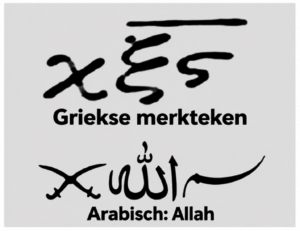
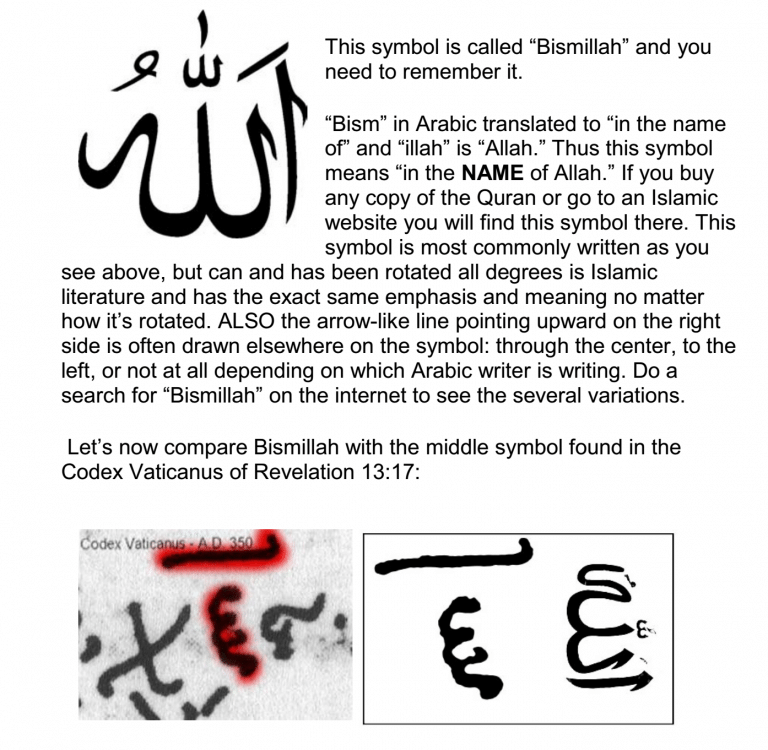
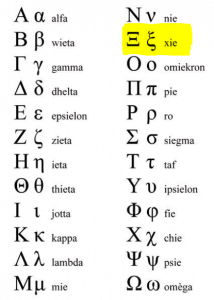
Some believers also see the halal certification mark as a possible foreshadowing of the coming mark of the beast in Revelation 13. They point to similarities between Islamic calligraphy and the Greek characters traditionally associated with the number (the mark) of the beast.
Revelation speaks of a time when no one will be able to buy or sell without the mark of the beast. According to this interpretation, today’s halal mark could be a forerunner of that. Notice the word “Bismillah” in the image. In this view, the Greek mark in Revelation is not only meant as the number 666, but as an emblem, a mark of the beast. When the apostle John saw it, he had no way of placing it in his own time. After all, the Quran and Arabic calligraphy did not yet exist in his day.
Compare it to the McDonald’s logo: the “M”. If John had seen the McDonald’s sign, he would simply have written down what he saw, because he couldn’t have understood what it stood for. He was, after all, looking into the future. Following this line of thought, because the mark he saw resembled the Greek characters “XI”, he wrote down exactly what he saw.
In all honesty, this interpretation is disputed, even among Bible-believing scholars, and it cannot be proven with certainty from Scripture (see also the FAQ below). We share it not as a certainty, but as a call to stay watchful.
“But I pray before I eat, don’t I?”
Some believers reason that any food can be sanctified through prayer. Paul does indeed speak about thankfulness and prayer.
1 Timothy 4:4-5 (WEB)
“For every creature of God is good, and nothing is to be rejected, if it is received with thanksgiving. For it is sanctified through the word of God and prayer.”
This passage, however, needs to be read alongside Paul’s warnings against food sacrificed to idols. Prayer is not a way to knowingly take part in a religious act that God forbids.
Once again, the difference lies between ordinary food and food that has been deliberately dedicated in a religious act.
What does this mean in practice for a believer?
A believer doesn’t need to become anxious about every piece of meat whose background he doesn’t know. The Bible does not teach a life of constant fear or control around food.
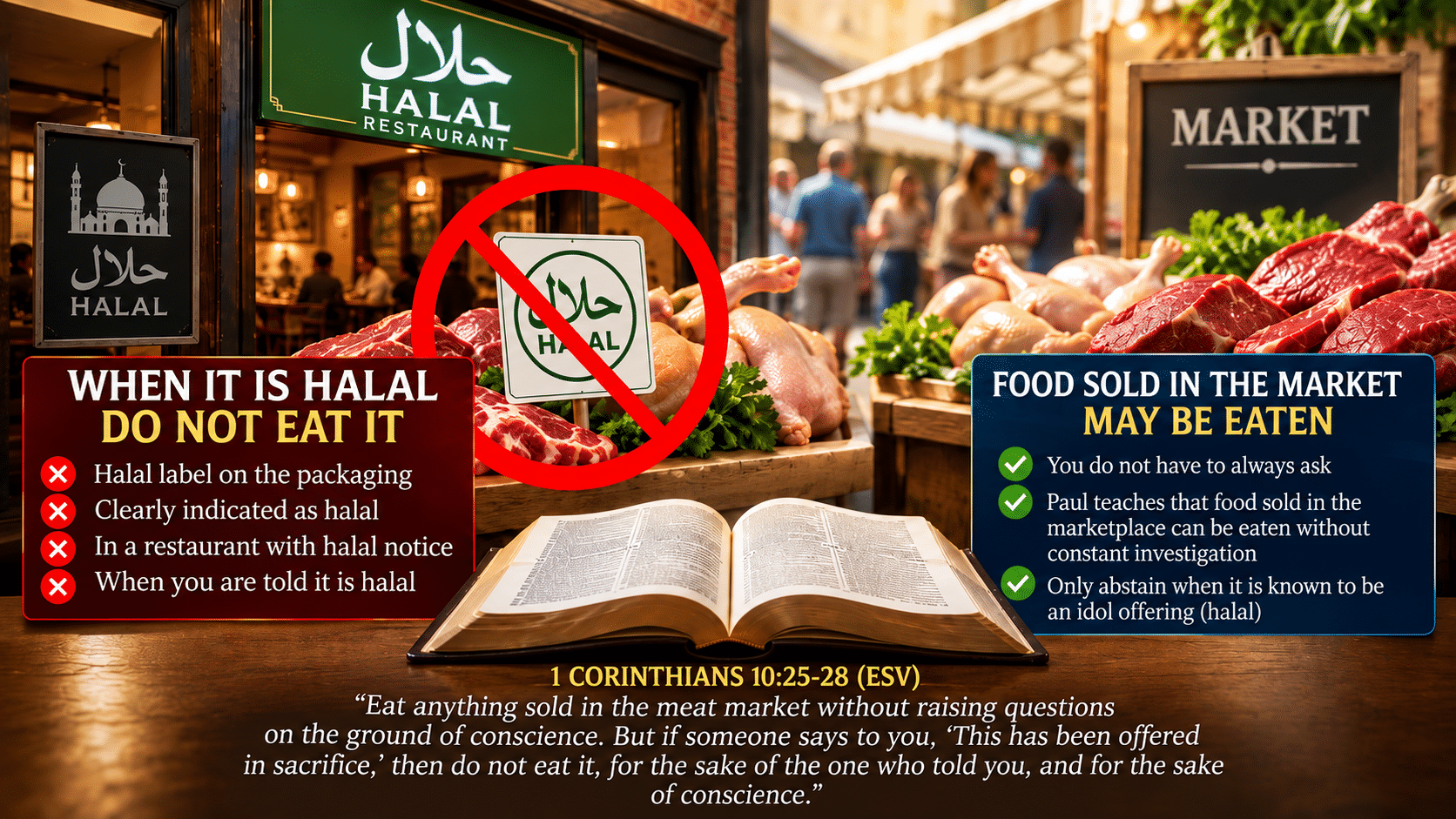
But when it is clear that food is deliberately part of a religious dedication to another deity, it is wise, Biblically speaking, to keep away from it. Once it says so on a product’s packaging, or it is clearly indicated in shops and restaurants, don’t buy it and don’t eat there. Your world may suddenly feel a lot smaller; you won’t be able to buy or sell. Perseverance saves.
A few simple principles can help here:
- Known: when you know something has been deliberately offered as an idol sacrifice, keep away from it.
- Knowing participation: don’t knowingly take part in a religious act that conflicts with the worship of God or gives honour to idols.
- Conscience: act with a clear conscience before God.
- Love: don’t use your freedom in a way that causes others to stumble.
Conclusion
The Bible does not teach that meat becomes spiritually contaminated in itself simply because it was slaughtered in a certain way. The heart of the matter goes deeper:
Has the food been deliberately made part of religious worship
and dedication to another deity?
The Islamic sources show that the name of Allah plays an important role in halal slaughter. In light of the Biblical teaching on food sacrificed to idols, it is therefore necessary for you as a believer to keep your distance from it.
At the same time, we need to keep following Paul’s teaching in full. He teaches that food in itself does not bring us closer to God, and that a believer does not have to investigate every item of food. The clear line is drawn when it is known that food is an idol sacrifice, or when someone knowingly takes part in idolatry.
In the end, this is not about fear of food, but about faithfulness to God. A follower of Lord Yeshua is called to discern between what is simply food and what is bound up with religious worship.
So the most important question is not only:
“What am I eating?”, but:
“To whom has this food been dedicated, and to what worship
am I binding myself when I take part in it?”
Romans 12:1 (WEB)
“Therefore I urge you, brothers, by the mercies of God, to present your bodies
a living sacrifice, holy, acceptable to God, which is your spiritual service.”
Read what Lord Yeshua Himself says:
Revelation 2:14 (WEB)
14 But I have a few things against you, because you have there some who hold the teaching of Balaam, who taught Balak to throw a stumbling block before the children of Israel, to eat things sacrificed to idols, and to commit sexual immorality.
Frequently Asked Questions
Is halal meat automatically an idol sacrifice?
In the sense Paul describes, yes. According to Islam’s own sources, halal slaughter is a religious act in which the name of Allah is spoken over the animal. From a Biblical perspective, the Allah of the Quran is not the God of the Bible (see above). That does not make the meat itself impure, but once you know that meat has been dedicated in this way, Paul’s instruction applies: don’t eat it (1 Corinthians 10:28). The Bible forbids taking part in idol sacrifices.
So is the meat itself demonic?
No. The Bible does not teach that meat as matter becomes demonic. Paul makes it clear that food in itself does not bring anyone closer to or further from God. The problem does not lie in the substance of the meat, but in the religious meaning of the act and in knowingly taking part in a form of worship that does not belong to God. That is why a follower of Lord Yeshua needs to distinguish between the food itself and the religious dedication it is bound up with.
Does a Christian always need to know how meat was slaughtered?
No. You don’t need to ask about every piece of meat whether it is halal. Paul teaches that a believer can eat food sold at the market without constantly investigating where it came from. But once you know that meat is halal — for example because it is explicitly labelled as halal, carries a halal certification mark, or is clearly offered as halal in a restaurant — you also know it has been prepared according to Islamic regulations. In that case, as a follower of Lord Yeshua, you can consciously choose not to eat it. Paul draws a clear line: when it is made known that food is an idol sacrifice, the believer should refrain from it (1 Corinthians 10:25-28). So this is not about fear of food, but about what you knowingly understand and what you do or don’t want to take part in.
Why is Acts 15 important?
Because there the apostles state explicitly that believers from among the nations must abstain from food sacrificed to idols. This makes it clear that idolatry remains a serious matter for non-Jewish followers of Lord Yeshua too.
Is the halal certification mark the same as the mark of the beast?
That cannot be established from the Bible as a proven fact. The same is true of the book of Revelation as a whole. This article seeks to warn against snares and deception. Stay watchful.
So what is the most important Biblical lesson in the end?
The most important lesson is faithfulness to God. A believer doesn’t need to be afraid of food, but does need to discern between ordinary food and knowingly taking part in religious worship that does not belong to God.
Whoever follows Lord Yeshua is called to live in freedom, but to always use that freedom
in faithfulness to God, with a clear conscience,
and without taking part in idolatry.