Why Lord Yeshua did not teach a Trinity.
In-depth summary:
Who is God? That question lies at the foundation of biblical faith. Anyone who wants to build their faith on the Bible has to start with what God Himself has revealed and with the teaching of Lord Yeshua, whom the Father sent into the world. No church tradition, theological formula or human authority can dictate what we must believe about God if it cannot be convincingly shown from Scripture.
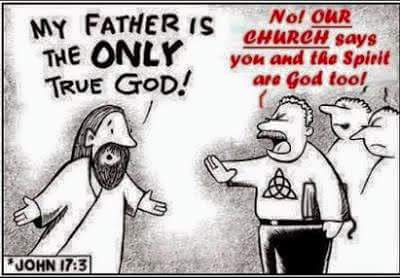
The central claim of this article is clear: Lord Yeshua did not teach the Trinity to His disciples as a doctrine of faith. He proclaimed the one God, affirmed Israel’s confession of faith and made the Father known. In John 17:3 He calls the Father the only true God and Himself the One sent by Him. If the Trinity really is an essential truth about who God is, someone needs to show where Lord Yeshua explicitly taught it.
The distinction between the Father and Lord Yeshua runs through the whole Bible. The Father sends and grants authority; Lord Yeshua obeys and carries out His mission as Mashiach. Paul, too, speaks of one God, the Father, and one Lord, Jesus Christ. None of this takes anything away from Lord Yeshua’s unique, heavenly and exalted position. The Bible describes the Spirit as God’s own Spirit, through which He works and carries out His will. We also take an honest look at the texts that defenders of the Trinity cite most often.
The formal doctrine of the Trinity only took shape over the first few centuries and was fixed by church councils. That doesn’t automatically make it wrong, but church approval is no substitute for biblical grounding. That is why this article is also a call to place the authority of Lord Yeshua above human traditions.
Our conclusion: we do not accept the Trinity as a doctrine taught by Lord Yeshua. The Father is the only true God, Lord Yeshua is His sent Mashiach, and God’s Spirit works in harmony with His will. It is not a church system that decides how we read the Bible; the Bible decides which teaching we may accept.
Lord Yeshua came to make the Father known to us. So we test every teaching about God against His words and the witness of the Bible.
In-depth explanation
1. Introduction: who decides what we must believe about God?
Many believers have been taught that God is one being made up of three co-equal Persons: the Father, the Son and the Holy Spirit. This teaching is usually presented as if Lord Yeshua taught it Himself and the apostles passed it on as settled doctrine. But where do we actually find that explicit teaching in Lord Yeshua’s own words?
We need to distinguish between what the Bible says and what later theologians concluded from it. A teaching doesn’t become biblical because churches have taught it for centuries, and a human creed doesn’t gain divine authority because a council wrote it down.
So our starting point is simple: the Bible is the standard. We don’t begin with traditions, philosophical definitions or later creeds, but with the words of God and the testimony of Lord Yeshua and His apostles.
We must not start with a doctrine and then go looking for it in the Bible.
We must start with what the Bible actually teaches.
2. God is one: Israel’s foundational confession
Biblical revelation does not open with an explanation of three divine Persons. Israel’s faith begins with the confession that God is one. That is the backdrop against which we have to understand Lord Yeshua’s teaching.
Deuteronomy 6:4 (WEB)
“Hear, Israel: Yahweh is our God. Yahweh is one.”
This is not a side note waiting to be replaced by a more complicated view of God. It is the heart of Israel’s faith. The God of Abraham, Isaac and Jacob is the one God, and the prophets called Israel back to Him again and again.
Lord Yeshua explicitly affirmed this confession when He was asked which commandment is the first of all.
Mark 12:29 (WEB)
“Jesus answered, ‘The greatest is: Hear, Israel, the Lord our God, the Lord is one.’”
Lord Yeshua did not use this moment to introduce a teaching about three co-equal Persons. He pointed His listeners to the one God and placed His own teaching within the Scriptures of Israel.
A Trinitarian may reply that, in his understanding, the Trinity is compatible with belief in one God. But that still does not show that Lord Yeshua taught this doctrine Himself. A later explanation of God’s oneness cannot, without proof, be treated as the original teaching of the Messiah.
3. The Father is the only true God
One of Lord Yeshua’s most important statements appears in His prayer to the Father. In it He draws a clear line between the Father, whom He calls the only true God, and Himself, the One sent by the Father.
John 17:3 (WEB)
“This is eternal life, that they should know you, the only true God,
and him whom you sent, Jesus Christ.”
Notice what it says. The Father is the only true God; Lord Yeshua is the One He sent. When Lord Yeshua describes eternal life, He doesn’t speak of knowing a Trinity, but of knowing the Father and the One He sent.
Other sayings confirm that distinction. “The Father is greater than I,” Lord Yeshua says in John 14:28. And He declares that He does not act on His own authority:
John 5:30 (WEB)
“I can of myself do nothing. As I hear, I judge, and my judgment is righteous; because I don’t seek my own will, but the will of my Father who sent me.”
A clear pattern emerges: the Father sends, grants authority and makes His will known; Lord Yeshua obeys, speaks on His behalf and carries out His mission.
Some explain these sayings purely in terms of Lord Yeshua’s humility during His earthly life. But the Bible also speaks of the Son’s subjection to God after the end of all things.
1 Corinthians 15:28 (WEB)
“When all things have been subjected to him, then the Son will also himself be subjected to him who subjected all things to him, that God may be all in all.”
This verse describes a lasting relationship of authority and submission. The Bible presents the Father as God and the Son as the One to whom God has given authority.
The Father is the God of Lord Yeshua. Lord Yeshua is the Messiah sent by God. That distinction is not a detail; it lies at the heart of the apostolic witness.
4. Lord Yeshua is the Messiah sent by God
The Hebrew term Messiah means Anointed One. In Lord Yeshua’s teaching, the mission He received from the Father is central.
John 6:38 (WEB)
“For I have come down from heaven, not to do my own will, but the will of him who sent me.”
His words, works and authority have to be understood within that relationship. The fact that He existed before His earthly life and came down from heaven doesn’t remove the distinction between Him and the Father. Where He comes from is a different question from who He is as God.
Paul makes the same distinction. He doesn’t speak of three co-equal Persons, but of one God, the Father, and one Lord, Jesus Christ.
1 Corinthians 8:6 (WEB)
“…yet to us there is one God, the Father, of whom are all things, and we for him; and one Lord, Jesus Christ, through whom are all things, and we live through him.”
The Father is the source of all things; through the Lord, God’s works are carried out. That fits exactly with the distinction Lord Yeshua Himself makes.
This doesn’t make Lord Yeshua unimportant, and it doesn’t deny His heavenly origin, exalted position or unique role. He is the Messiah appointed by God, through whom the Father carries out His plan of salvation. But that unique position is no licence to add a doctrine of three co-equal divine Persons to the text.
5. The Spirit is God’s own Spirit at work
The Bible speaks of the Spirit of God as God’s own Spirit. Depending on context, the Hebrew word ruach can mean wind, breath or spirit. The meaning of the word alone doesn’t settle any theological question; for that we need to look at the whole Bible.
Genesis 1:2 (WEB)
“God’s Spirit was hovering over the surface of the waters.”
Elsewhere, too, the Bible describes God’s Spirit as the power and presence through which God works, equips people, lets the prophets speak and carries out His will.
2 Peter 1:21 (WEB)
“For no prophecy ever came by the will of man, but holy men of God spoke,
being moved by the Holy Spirit.”
The text shows how God works in people through His Spirit. God’s Spirit is therefore not a second or third divine being alongside God. The Bible calls it God’s Spirit and describes its working as being in harmony with God’s will.
Trinitarians point out that in some passages the Spirit speaks, teaches and guides. Those texts must not be ignored. But personal language does not, by itself, prove that the Spirit is a separate, co-equal divine Person within a Trinity. After all, the Bible also speaks of God’s hand, God’s arm and God’s wisdom in personal terms. What decides the matter is the overall coherence of the Bible, not a definition assumed in advance.
6. Lord Yeshua on the Comforter
In John 14–16, Lord Yeshua speaks about the Comforter whom the Father will send. He links this promise to His own presence with His disciples.
John 14:16 (WEB)
“I will pray to the Father, and he will give you another Counselor,
that he may be with you forever.”
(The Greek word here, paraklētos, is translated “Comforter” in many English Bibles and “Counselor” in the WEB.) Lord Yeshua asks the Father, and the Father gives the Comforter. But the passage does not say that the Father, the Son and the Comforter together form one being made up of three co-equal Persons. Two verses later, Lord Yeshua makes the link with Himself:
John 14:18 (WEB)
“I will not leave you orphans. I will come to you.”
In the same chapter He also speaks of the Father dwelling in believers. So the Spirit cannot be separated from God’s presence and the work of Lord Yeshua. That is why we speak of the Spirit of Yeshua: God’s Spirit at work in believers, through which the presence and work of Lord Yeshua become real in their lives.
One distinction matters here. Lord Yeshua rose bodily from the dead. “A spirit doesn’t have flesh and bones, as you see that I have,” He says in Luke 24:39. After that He was taken up into heaven (Acts 1:9–11). His risen body is not present in every believer at the same time. God’s Spirit is: it can dwell in believers and connect them with God and with Lord Yeshua. That is how Lord Yeshua could go to the Father without leaving His disciples as orphans.
The Comforter is God’s Spirit, through which God works in His people and through which
the presence and work of Lord Yeshua become real in believers.
7. Why Lord Yeshua gave no Trinitarian formula
Lord Yeshua never gave His disciples a doctrinal formula defining God as one being in three Persons. He taught them to know the Father, called them to repentance and obedience, and showed them the way to God.
John 14:6 (WEB)
“Jesus said to him, ‘I am the way, the truth, and the life.
No one comes to the Father, except through me.’”
The direction is clear: through Lord Yeshua we come to the Father. He is the way to the Father, not the Father who sent Him.
The fact that the word Trinity doesn’t appear in the Bible is not, on its own, the whole argument. A word can be missing while the idea is expressed in other ways. The real question is whether the content of the later doctrine is actually taught by the Bible. The Trinity is defended by combining various texts and reading them within a system that was worked out later. But the existence of that interpretation doesn’t prove that Lord Yeshua taught the system Himself. We look at the most important of those texts below.
8. Texts often cited as proof
If we say the Bible decides, we also have to examine the texts that defenders of the Trinity bring forward. Below we discuss the most important ones, honestly and in their own context.
Matthew 28:19: the baptismal command
Matthew 28:19 (WEB)
“Go and make disciples of all nations, baptizing them in the name of the Father
and of the Son and of the Holy Spirit.”
This is the text cited most often, and rightly so: here Lord Yeshua names the Father, the Son and the Holy Spirit together, in His own words. We acknowledge that without reservation. The only question is what the text actually says. The verse names three in connection with baptism. It does not say that they form one being, nor that they are co-equal. Being named together is not a definition of God’s nature. Paul, for example, charges Timothy “in the sight of God, and the Lord Jesus Christ, and the chosen angels” (1 Timothy 5:21), and no one concludes from that that they form one being.
It is also striking how the apostles carried out this command. In the book of Acts they baptize in the name of Jesus Christ (Acts 2:38; see also 8:16, 10:48 and 19:5). In the earliest preaching, then, the baptismal command did not function as a doctrinal formula about God’s inner being. It stood in the light of the mission with which the Father sent the One He sent and gave His Spirit.
John 10:30: “I and the Father are one”
These words come in a conversation about the sheep that no one can snatch out of the Father’s hand (John 10:27–29). The subject is unity of work, will, and protection. Lord Yeshua uses the same language for His disciples: He prays “that they may be one, even as we are one” (John 17:22). No one concludes from that that the disciples together form one being. When His opponents then accuse Him, He defends Himself with the words: “I am the Son of God” (John 10:36). The Spirit is not mentioned in this passage at all.
John 20:28: “My Lord and my God!”
Thomas addresses the risen Lord Yeshua as “my Lord and my God”, and Lord Yeshua does not correct him. This is an important text, and we would rather not make it smaller than it is. But read it in its chapter. Shortly before, Lord Yeshua says: “I am ascending to my Father and your Father, to my God and your God” (John 20:17). And John ends the chapter by stating the purpose of his gospel: that you may believe “that Jesus is the Christ, the Son of God” (John 20:31). In biblical language the word “god” can also be used for someone who acts on God’s behalf. Lord Yeshua Himself quotes an example of this in John 10:34 (Psalm 82:6), and God tells Moses, “I have made you as God to Pharaoh” (Exodus 7:1). Moreover, this is an exclamation by Thomas, not a doctrine formulated by Lord Yeshua, and the Spirit does not appear in it.
John 1:1 and 8:58
These texts speak of the Word that was with God in the beginning, and of Lord Yeshua’s existence before Abraham. They are about His origin and exalted position, which we already acknowledged in section 4. Anyone who truly wants to know Lord Yeshua must take them seriously. But these texts, too, do not name three co-equal Persons of one God; the Spirit is not mentioned in them. They concern the question of who Lord Yeshua is, not a Trinitarian formula.
Even the texts cited most often do not define the Father, the Son, and the Spirit as three co-equal Persons of one God. That conclusion was attached to these texts later.
9. The decisive foundation: Lord Yeshua made the Father known to us
This is the foundation of our rejection of the Trinity doctrine. It isn’t primarily about church history or philosophical definitions. It’s about the mission for which Lord Yeshua came into the world: to make the Father known and to teach us who God is. So we ask the fundamental question:
If God really is a Trinity, and this doctrine is necessary for knowing the true God,
why did Lord Yeshua never explicitly teach His disciples this crucial point?
Lord Yeshua did not come to leave God’s identity unclear or to withhold a truth that would be essential to people’s faith and eternal life. If the Trinity were the fundamental mystery of God’s identity, you would expect Him to have said so plainly. Yet in John 17:3 He describes eternal life as knowing the Father, the only true God, and the One He sent. There is no mention of a Trinity there.
Defenders of the Trinity will say the doctrine can be derived from various Bible texts. Connecting texts is nothing wrong in itself; every Bible reader does it, and this article does it too. The difference lies in what happens next. With the Trinity, a derived interpretation was turned into a required article of faith, and for centuries anyone who rejected it has been regarded as a heretic. A doctrine given that much weight ought to be found more clearly in the teaching of the Mashiach than as a conclusion drawn from a combination of texts.
So our conclusion is clear: we do not accept the Trinity as a doctrine taught by Lord Yeshua. Not because we want to diminish His words, but because we would rather not attribute to Him definitions He never spoke.
If Lord Yeshua came to earth to make the Father known, then we must believe Him when He tells us who the only true God is.
10. Lord Yeshua is our highest Master and Teacher
If Lord Yeshua taught us who God is, then His teaching must remain the starting point for every doctrine. He warned His disciples not to raise human spiritual authority above one another.
Matthew 23:8 (WEB)
“But don’t you be called ‘Rabbi,’ for one is your teacher, the Christ, and all of you are brothers.”
That doesn’t mean no one may teach. It does mean that no theologian, church, or council may place itself above the Mashiach or declare a doctrine beyond question. Anyone who claims to speak for Him must be willing to have their teaching tested against His words. Church tradition cannot take the place of the Master’s authority.
11. What did the first disciples believe?
The apostles proclaimed Lord Yeshua as the Messiah appointed and sent by God.
Acts 2:22 (WEB)
“Men of Israel, hear these words! Jesus of Nazareth, a man approved by God to you by mighty works and wonders and signs which God did by him among you, even as you yourselves know…”
That is the language of apostolic preaching: God acts through the One He sent. Paul writes in the same way about one God, the Father, and one Lord, Jesus Christ (1 Corinthians 8:6).
We should be careful not to claim that every early believer used exactly the same words. What we can examine is what the apostles actually wrote and preached. Their words are the standard; later formulations are tested against them.
12. How did the doctrine of the Trinity develop?
The terminology and formal definition of the Trinity developed gradually. The word Trinity does not appear in the Bible. The Latin term trinitas was used by Tertullian in the early third century. In the fourth century, the councils of Nicaea (325) and Constantinople (381) played an important role in fixing the church’s formulations about the Father, the Son and the Holy Spirit.
That development doesn’t automatically prove that every later formulation is wrong. It does show that we must distinguish the original biblical texts from the concepts later churches used to explain them. A council can formulate a doctrine, but it cannot retroactively prove that Lord Yeshua gave that same formula to His disciples. An appeal to church tradition alone is therefore not enough. Scripture has the final say.
13. Back to the Bible and the teaching of Lord Yeshua
Anyone who returns to the Bible sees a coherent pattern. The Father is the one God. Lord Yeshua is the Messiah He sent. The Father acts through His Spirit and through His Son. Through Lord Yeshua we receive access to the Father.
Ephesians 2:18 (WEB)
“For through him we both have our access in one Spirit to the Father.”
Through Lord Yeshua, in one Spirit, to the Father: that is the direction of apostolic faith. The Father doesn’t need to be redefined in order to honour Lord Yeshua. Lord Yeshua doesn’t need to be identified with the Father in order to recognise His unique position as Messiah. And God’s Spirit doesn’t need to be declared a third co-equal Person in order to recognise its real presence and work.
The Bible teaches us to know the Father, to follow Lord Yeshua as the One He sent, and to live by God’s Spirit.
14. Frequently asked questions
Does the word Trinity appear in the Bible?
No. That fact alone doesn’t settle the discussion, but the content of the doctrine does have to be tested directly against the Bible. This article concludes that Lord Yeshua did not teach the doctrine of three co-equal divine Persons as an explicit doctrinal formula.
Doesn’t Lord Yeshua name the Father, the Son and the Holy Spirit together in Matthew 28:19?
Yes, and we acknowledge that. But the verse names three in connection with baptism; it does not say that they form one being or are co-equal. The apostles also baptized in the name of Jesus Christ (Acts 2:38). See section 8 for the full discussion.
Does this mean Lord Yeshua is not important?
No. Lord Yeshua is the Messiah sent by God, the Way to the Father and the One through whom God carries out His plan of salvation. His unique position should be recognised as the Bible describes it, without identifying Him with the Father.
So is the Spirit just a force?
The Bible speaks of God’s Spirit as God’s own Spirit and His activity. That Spirit is not simply an impersonal force separate from God: it is God Himself who is present and at work through His Spirit. At the same time, texts in which the Spirit speaks or leads do not automatically prove that it is a separate, co-equal divine Person within a Trinity.
Does the late origin of the doctrine prove it is wrong?
Not on its own. What decides the matter is whether its content is taught by the Bible. That’s why we test the Trinity doctrine against the words of Lord Yeshua and the witness of the apostles, not just against later church decisions.
Then why do so many churches teach the Trinity?
The doctrine was worked out over centuries of theological explanation, church debate, and councils, and was written into creeds. That explains its historical position, but it doesn’t automatically make it a teaching of Lord Yeshua. Every believer may, and should, test its foundations against the Bible for themselves.
15. Knowing the Father and praying to Him
Lord Yeshua taught His disciples to turn to the Father. Prayer is not an exercise in working out a doctrinal formula; it is coming to God with trust and dependence.
Luke 11:2 (WEB)
“When you pray, say, ‘Our Father in heaven, may your name be kept holy.
May your Kingdom come. May your will be done on earth, as it is in heaven.’”
The Father is at the centre of this prayer. That doesn’t call for rejecting Lord Yeshua; it calls for taking Him seriously. We honour Him by listening to His teaching, by recognising Him as the Messiah sent by God, and by refusing to make His words subordinate to human traditions.
Conclusion: hold on to what the Bible teaches
At the heart of this article lies Lord Yeshua’s mission: He came to make the Father known. He calls the Father the only true God and Himself the One sent by Him. He affirms Israel’s confession of faith, and the apostles speak of the one God, the Father, and the one Lord, Jesus Christ. Even the texts most often cited as proof do not define God as three co-equal Persons.
That is why we do not accept the Trinity as a doctrine that Lord Yeshua handed down to His disciples. The historical development of a doctrine cannot replace biblical grounding. Our standard is not the tradition of a church, the ruling of a council or the authority of a theologian, but the witness of the Bible. We follow Lord Yeshua, recognise Him as the Messiah sent by God, and turn to the Father, just as He taught us.
God is one.
The Father is the only true God. Lord Yeshua is His sent Messiah.
God works through His Spirit.
We follow Lord Yeshua and test every teaching against the Bible.
>>Read also: Yeshua as the Visible Revelation of God<<